The Trustpilot system
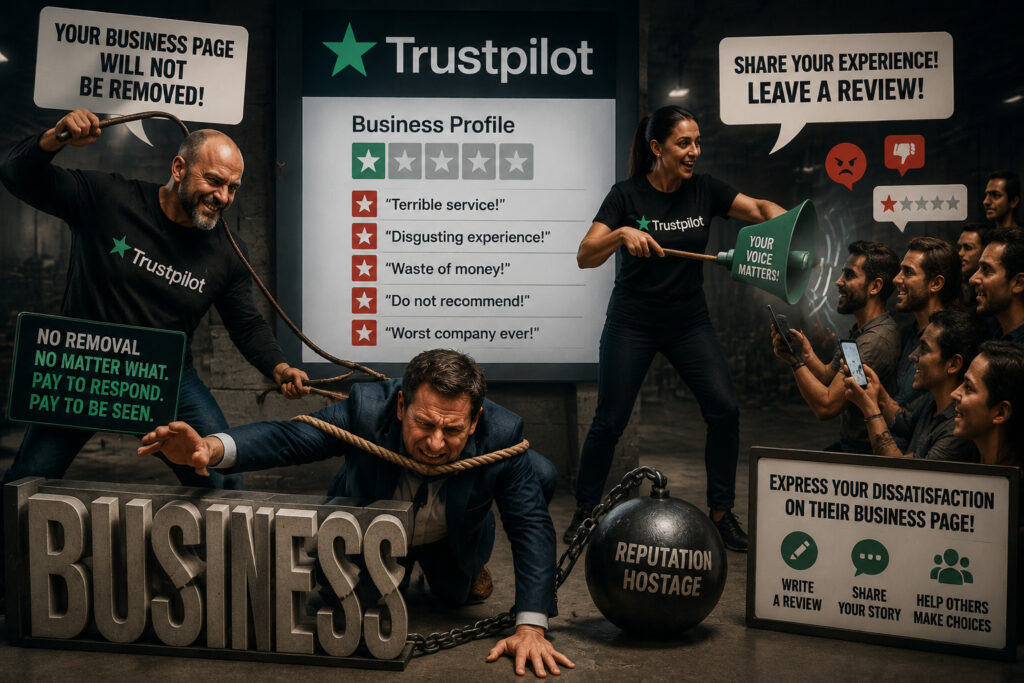
The Trustpilot system : your unsolicited business page will never be removed !

The Truspilot system : Why does Truspilot bring no values for companies and customers ?

Trustpilot is an online review platform that creates profile pages for businesses, sometimes without their request or consent.

This practice has led to several legal disputes in Europe. Companies, including Dotnet in Paris, have challenged the creation of these pages in court, arguing that the system harms their reputation and, in their view, encourages them to subscribe to Trustpilot’s paid services in order to better control their online image.

These legal disputes have fueled criticism of the platform’s business model and raised questions about whether some of its practices are compatible with French law.

Business profile pages created without the companies’ consent

The Trustpilot system

Trustpilot creates business profile pages on its platform without the knowledge or consent of the companies concerned. Its model is therefore the opposite of platforms such as Google Business, Facebook, Amazon, and Instagram, where businesses create and manage their own profiles.

A professional’s first encounter with the Trustpilot platform can feel like a digital violation—or, depending on one’s perspective, a digital shock—when they discover that dozens of unsolicited reviews, most of them negative, have been posted on an unsolicited business profile.

This situation often creates a strong sense of discomfort, prompting the business owner to thank reviewers or respond to the reviews. It is at this point, according to critics of the platform, that the trap closes.
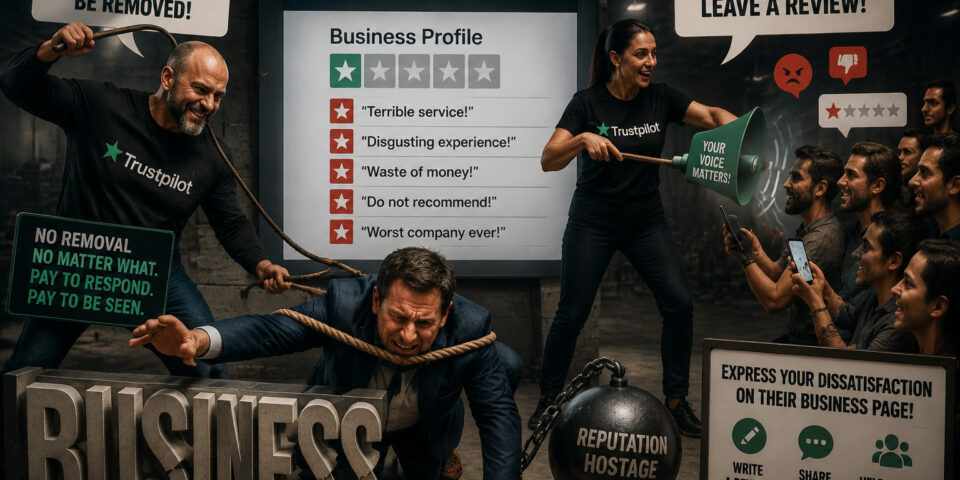
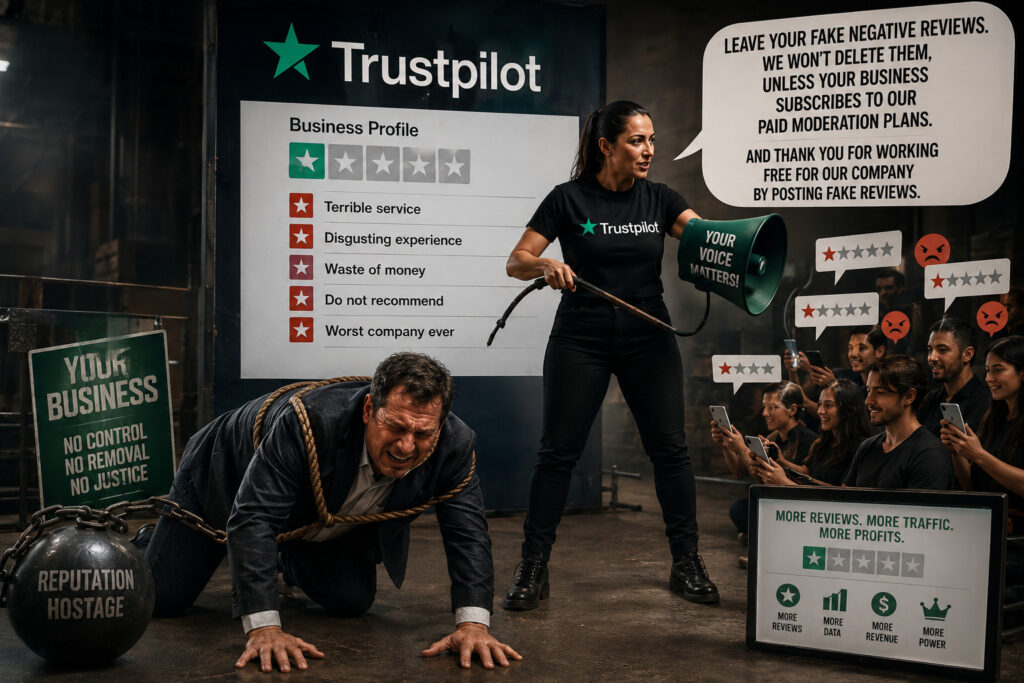
Negative reviews are rarely backed by any supporting evidence from their authors—critics argue this is because many of them are fake.

Responding to positive or negative reviews ultimately amounts to working for Trustpilot without compensation. Every hour a business spends replying to reviews or collecting customer feedback helps generate content and engagement for the platform at no cost to Trustpilot.

This approach is the opposite of the Google Business model. Businesses voluntarily create their own business profiles and remain free to delete or deactivate them at any time. Because they retain control over their presence, they are generally more willing to invite genuine customers to share authentic experiences with their products or services. By contrast, critics argue that on Trustpilot, efforts to collect positive reviews are often prompted only after a business has been overwhelmed by what it believes to be fake or malicious reviews.

Trustpilot does not generally require reviewers posting negative feedback to provide documentary evidence to support their claims. As a result, critics argue that the platform offers little value to businesses that must deal with internet trolls, disgruntled competitors, or individuals hiding behind false identities. From this perspective, the platform risks becoming irrelevant to businesses because it provides no meaningful way to distinguish genuine customer experiences from abusive or misleading content. Critics compare it to dirty water flowing in the gutter—a place where embittered individuals, narcissistic manipulators, and vexatious complainants gather, rather than a forum where businesses can build trust with legitimate customers.

The Trustpilot objective is to sell subscriptions and not to verify reviews

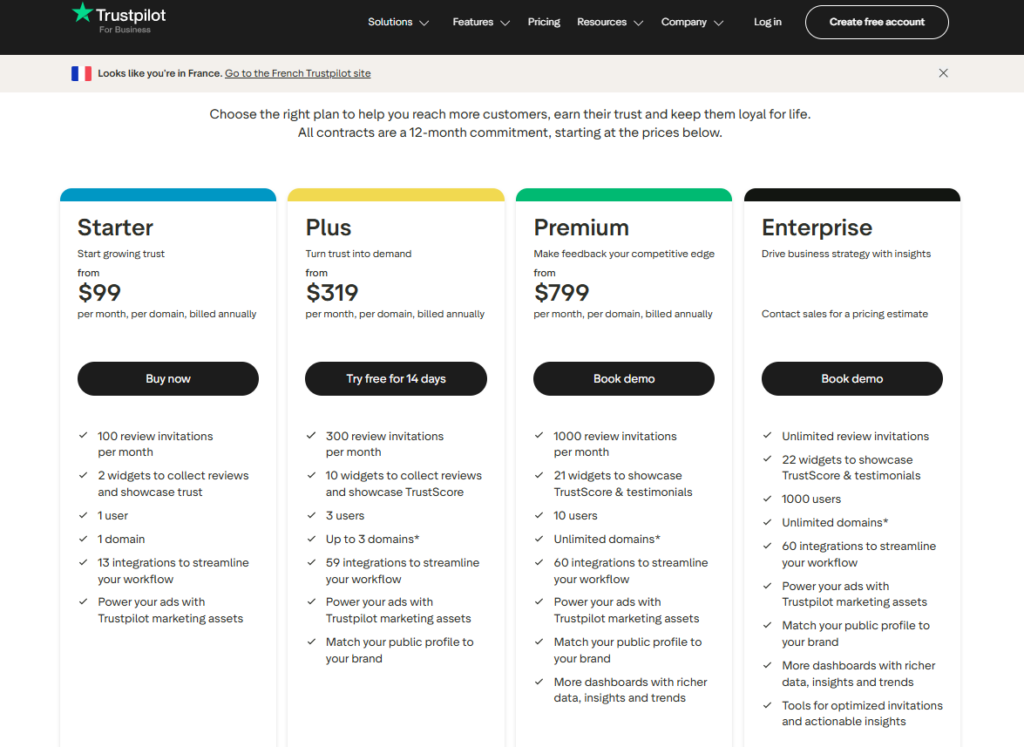
Trustpilot’s objective is to use fake customer reviews to pressure businesses into subscribing to its paid plans. Its pricing structure is available on its website, and this is where the problem arises. Few businesses are likely to purchase services from a company that, in their view, imposes them through coercive pressure. Those that do pay for Trustpilot’s services may also risk losing credibility with prospective customers.

A company that is confident in the quality of its services and products, and that has been established in its market for several years, is unlikely to subscribe to Trustpilot’s services. It may simply disregard the fake reviews that, according to critics, are allowed to proliferate on its business profile. Trustpilot may therefore struggle to attract major corporate clients, as it offers them little or no additional value.

Trustpilot is in conflict with thousands of businesses around the world, even though those businesses are supposed to be its customers.

According to its critics, Trustpilot provides no real value to businesses. Some companies have taken legal action against the platform, including Dotnet in Paris and Delcampe in Belgium. In Italy, the Competition Authority fined Trustpilot €4 million, and similar legal proceedings are reportedly underway in France, Spain, and Germany.

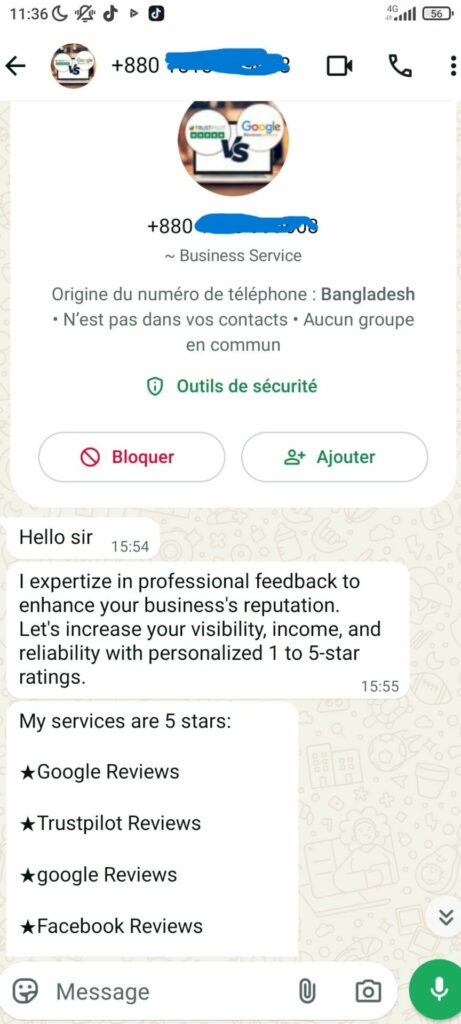
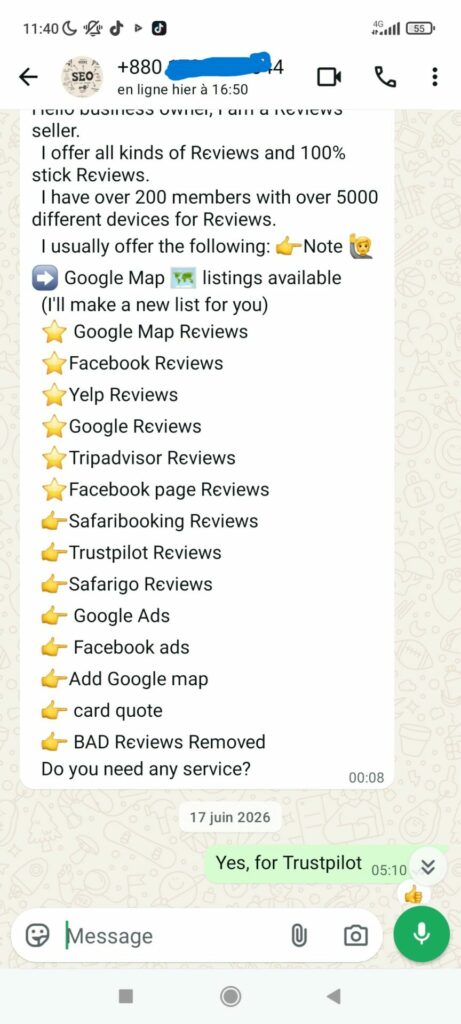
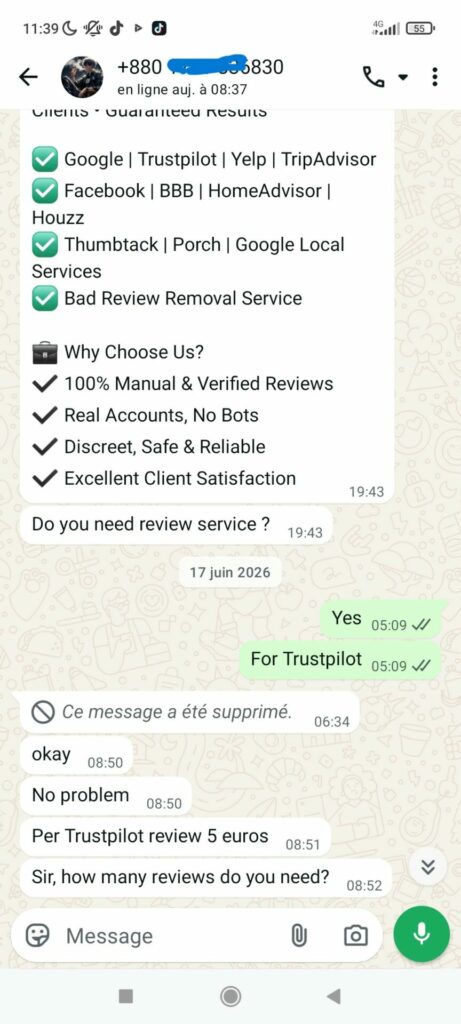
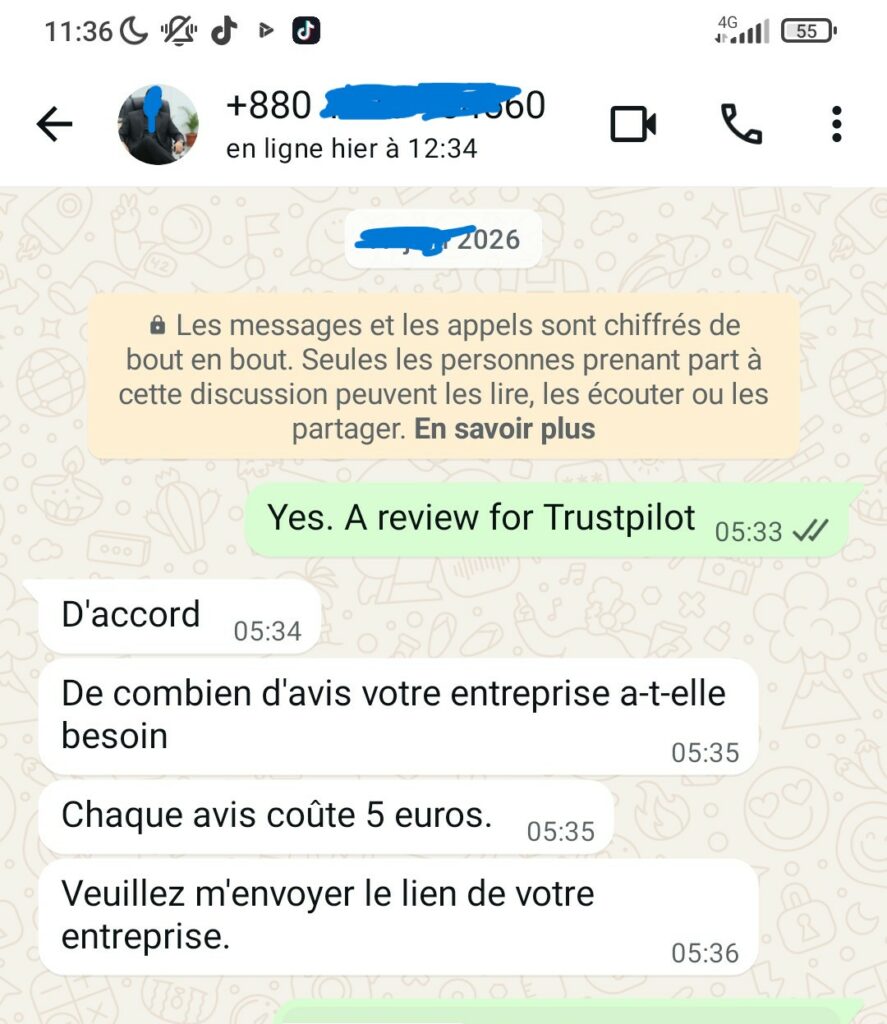
Critics accuse Trustpilot of failing to adequately verify the authenticity of the reviews published on its platform, a concern that many business owners say they have experienced firsthand. Businesses are also regularly approached by individuals, often claiming to be based in Bangladesh, offering to post fake positive or negative reviews for as little as €5.

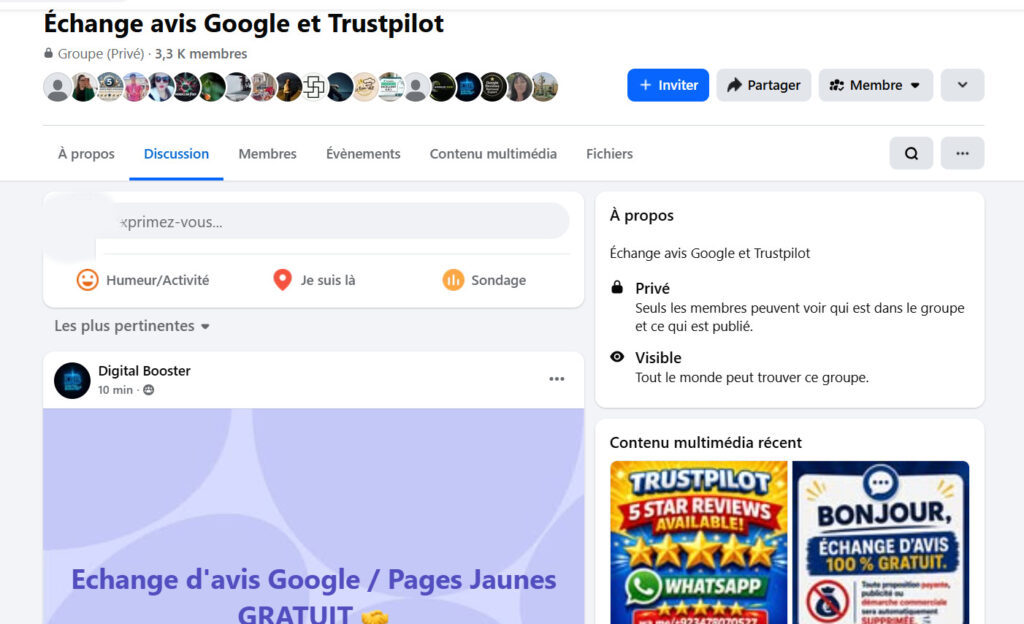
Facebook groups dedicated to exchanging fake reviews also exist, illustrating the broader problem of review fraud affecting online review platforms.

Companies harassed by reviewers from poor countries. The price starts at 5€ per review. 

In conclusion, the Trustpilot platform suffers from numerous shortcomings, beginning with its failure to verify reviews. Critics argue that Trustpilot’s real business model is not built on trust, but on selling subscriptions to businesses  Trustpilot therefore adds no value to either businesses or consumers.

Laisser un commentaire

Votre adresse e-mail ne sera pas publiée. Les champs obligatoires sont indiqués avec *

X